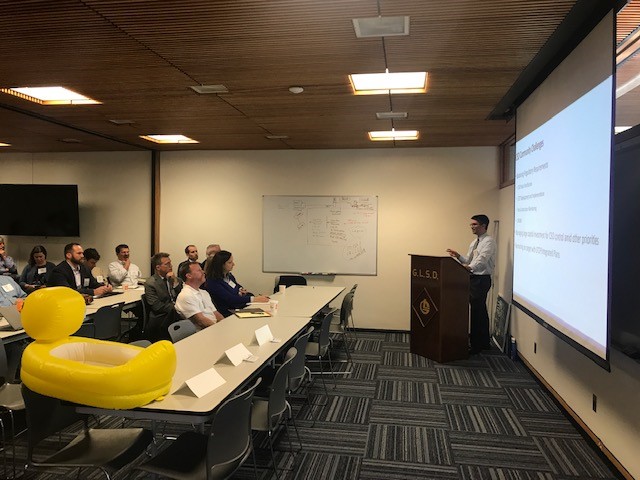
From June 15 to June 24, MCWRS hosted a series of four virtual panels on PFAS, NPDES Permits, Affordability, and Legal and Regulatory updates relevant to the water sector. This virtual series was meant to replace the annual MCWRS Symposium, which was last held in-person in 2019 prior to the COVID-19 pandemic.
Each panel featured four water industry leaders who represented a variety of local and national perspectives and offered valuable insight into their experiences on issues currently affecting Massachusetts municipalities.
Many of the themes remained the same; the need for (1) the use of sound science by MassDEP and Region 1 EPA in regulatory and policy decision-making, (2) educating the public on water utilities’ roles and financial needs, and (3) advocating on behalf of municipal interests on issues such as PFAS and CSOs. But, most importantly, the series highlighted the need and value of sharing experiences across the water sector. It is crystal clear that speaking with a coordinated and a unified message amplifies the concerns and interests of municipalities and is our best opportunity for regulatory agencies to hear our voices. Attendees who paid to attend the webinar series will receive a link to review the recordings. If you would like to receive the link, but were not able to register and attend, you can still receive the benefit by paying the attendance fee.
The Massachusetts Coalition for Water Resources Stewardship is a nonprofit organization committed to promoting watershed-based policies and regulations that effectively manage and conserve water resources. MCWRS is unique in its focus on protecting municipalities’ interests in an ever-changing regulatory environment. We promote using scientifically based, fiscally responsible approaches to realize environmental and community goals. Members include municipalities; public agencies that transport and treat drinking water, wastewater and stormwater; quasi-government agencies; and private organizations whose members are committed to the principles of stewardship and sustainability in protecting the environment and public health.
On April 13, Michigan Representatives Debbie Dingell and Fred Upton introduced legislation on PFAS known as the PFAS Action Act of 2021. The intent of this is Act is to have the EPA designate select PFAS as hazardous substances and establish a national drinking water standard.
Key takeaways from this legislation include the establishment of a national drinking water standard for PFAS within two years, the designation of PFAS as a hazardous material, and comprehensive PFAS health testing. Significant to the water sector, this legislation also requires EPA place discharge limits on industrial releases of PFAS, providing $200 million annually for wastewater treatment.
MCWRS is comprised of environmental professionals who are the front line for protecting public and environmental health. We are concerned that these requirements could devastate local water and wastewater utilities. The listed $200 million that is expected to be allotted by EPA does not seem to be enough to cover utilities in Massachusetts, let alone the nation.
The national increase in attention to the dangers of PFAS can be felt at a local level, with many communities being forced to make expensive infrastructure investments for PFAS remediation. The Town of Natick is considering investing $3 million to install carbon filters at a plant that reported PFAS levels of 24 ppt, while the Town of Wayland recently had to consider quick treatment options and an emergency MWRA connection due to a PFAS MCL violation.
While investment in PFAS remediation is necessary and important, there is concern that increased negative attention will change the public perception of the water sector and treatment plant employees. The conversation should be shifted to include alternative options for PFAS remediation, such as source control, instead of placing the brunt of the burden on the water sector, which is ultimately born by the ratepayers.
What has transpired to date in Massachusetts is just the tip of the iceberg relative to PFAS concerns. Medium-sized drinking water systems began sampling for PFAS in April 2021, and many have yet to receive their first-round results. Numerous small water systems will not sample until October. PFAS testing of wastewater effluent from POTWs is now being required in newly renewed NPDES permits but that monitoring is generally not yet occurring. A draft General NPDES Permit for small POTWs also requires PFAS testing, but is months away from being finalized. The regulatory focus on PFAs continues to ramp-up in many sectors while the toxicology and health risk science lags. The 20 part per trillion Massachusetts drinking water MCL for 6 PFAS compounds was heavily influenced by uncertainty factors due to the lack of scientific understanding of the toxicological effects of very low levels of this large and diverse group of chemicals. There is a lot more to come in the world of PFAS and water and it does not bode well for ratepayers.
On March 18, 2021, MCWRS held a webinar titled Sewage Notification: Responsibilities and Messaging to discuss the regulation of Bill H.4921, An Act Promoting Awareness of Sewage Pollution in Public Waters and its effect on municipalities and local wastewater systems.
Signed into law on January 22, Chapter 322 of the Acts of 2020 requires public advisories within 2 hours of a discharge of untreated or partially treated sewage from certain types of wastewater collection system structures into waters of the Commonwealth. This notification must also be sent to the department of public health and municipal board of health in the relevant outfall location, and any municipality directly impacted by the discharge.
MassDEP Commissioner Martin Suuberg expects regulations to be developed by January 2022 and implemented by July 2022. In April 2021, MassDEP will host meetings with stakeholders to discuss these implementation and regulation milestones. Comm. Suuberg noted that MassDEP will implement this law in collaboration with stakeholders, and hopes to have a collaborative partnership moving forward.
Phil Guerin, Director of Water & Sewer Operations for Worcester DPW&P, outlined the combined sewer system control improvements in Worcester following the 1980s. The improvements resulted in reducing 17 untreated outfalls to one treated outfall that averaged 6-28 treated CSO discharges annually. Phil requested clarity on regulation language, including the definitions of partially treated discharges. He noted the potential backlash frequent, unsettling health advisories can have on the public perception of wastewater utility workers, and stressed the need to move away from a one size fits all approach to regulation.
Karla Sangrey, Director of Upper Blackstone Clean Water, discussed high flow blending practiced at many wastewater treatment plants. This is another area requiring clarification as she raised the question of requiring a public health warning for discharges that meet NPDES requirements, and how that public health warning would be phrased. Again, she stressed the importance of managing this messaging to the public.
Jeff Murawski, DPW Deputy Commissioner of Wastewater for the City of Fitchburg, described the current Fitchburg sewer system to provide an insight into CSO permittees. As of 2020, the City of Fitchburg has 11 active CSO regulators with 128 CSO events, down from the 472 CSO events in 2012. Additionally, many projects are underway to improve wastewater infrastructure.
Josh Schimmel, Springfield Water & Sewer Commission Executive Director, tied together the themes and concerns expressed by panelists. While an appropriate amount of regulatory discretion can achieve goals, consideration must be made to its burden on systems. The goal of CSO notification is to notify the public when it is unsafe to be in water, however, there are a variety of factors outside of CSOs that could affect water quality, such as stormwater pollution. Overall, work needs to be done to clarify the message of CSO notification, and to highlight the need for more funding to resolve the issues.
Following the panel discussion, Phil ended the meeting by noting the promise by legislators and river advocates that they would stand by wastewater utilities if there was pushback from the public, and would fight for infrastructure funding. MCWRS understands the need for notification, and plans to work with DEP, but needlessly alarming the public with these notifications in cases where they are unnecessary is an irresponsible way to move forward. Work needs to continue to educate legislators and the public on the realities of CSOs.
As we approach the one-year mark of COVID-19 lockdowns, communities are beginning to see the effects these changes will have on their revenue streams. Smaller communities like Franklin and Concord have reported increased residential water usage with stay-at-home orders, resulting in higher revenue than budgeted, while larger communities like Framingham have seen gaps in their budget due to low commercial water usage.
The Framingham Patch reported on a January 26 Community Hour Meeting, where Mary Ellen Kelly, City Chief Financial Officer explained that, “Framingham has been using the water and sewer department’s yearly surplus to offset rate hikes. There was no rate hike in 2020, and increases in previous years have been between 2 and 4 percent. When the pandemic hit, businesses shut down, severely cutting into water and sewer revenue, leaving the department in a deficit — and with no savings to cover it.”
Diane Conners, Framingham DPW Financial Director, joined MCWRS’ February Member Chat to discuss these issues in more detail. One of the overarching themes of the conversation was the need to identify and resolve systemic problems in rate systems across the Commonwealth in order to make water utilities less prone to future disruptions. One suggestion is shifting to a monthly billing system in place of a quarterly system, which has the benefit of a more consistent revenue stream and the ability to better track trends in water usage. Monthly billing does have added costs that need to be considered before making a change. Additionally, Framingham is considering the transition to a base rate.
The massive infrastructure failures in Texas brought increased awareness to the critical role water and wastewater systems play in our daily lives. Perhaps a crisis of this magnitude coupled with the COVID-19 pandemic and its message about hand washing and sanitation will reinforce the need for federal, state and local investment in water infrastructure. Better yet, this renewed emphasis on water as a factor in protecting public health may help dissuade further regulatory and legislative efforts to constrain water and wastewater systems which make it more difficult for utility managers to do their jobs. As always, MCWRS encourages members to contact their representatives and advocate for responsible and reasonable policy and regulatory measures and funding that support local communities grappling with these issues.
“EPA Headquarters building 02 – Washington DC – 2012” by Tim Evanson is licensed under CC BY-SA 2.0
On Tuesday, January 5, EPA Region 1 responded to comments submitted by MCWRS on draft NPDES permits for the Massachusetts communities of Athol, Orange, and Gardner.
Of notable concern was the addition of PFAS monitoring requirements for treated effluent, sludge, and biosolids. This inclusion seems to be a case of EPA getting ahead of itself. Most wastewater operators are confident that they will find PFAS, which could result in utilities becoming the target of advocacy groups and the concerned public, instead of source polluters. This could prove to be especially problematic given we are far from understanding how to fully remove PFAS from wastewater and who should pay for it.
MCWRS members discussed these issues in more depth during our January Member Chat. Speaking to PFAS monitoring requirements for biosolids, a key question for utilities becomes what you do once you inevitably find PFAS. Jeffrey Longsworth, Barnes & Thornburg, explained that EPA issued Interim Guidance on the Destruction and Disposal of PFAS and Materials Containing PFAS (out for comment through February 22, 2021) which failed to identify a conclusive answer.
Given this lack of understanding, a conclusion of the discussion was the importance of developing an internal strategy for when PFAS are identified. The idea that rushed EPA requirements could force a treatment plant to test for PFAS before an action plan is identified could be problematic.
Shifting the conversation towards public notification, Joshua Schimmel, MCWRS Vice President, lamented on the harsh language included in PFAS notification, noting the potential for this language to erode the public’s confidence in their utilities.
Additionally, there are other, high priority issues that need to be dealt with ahead of PFAS. Mr. Schimmel suggested utilities shift their own messaging to acknowledge the dangers and prevalence of PFAS, while also acknowledging the variety of other issues that come from aging infrastructure and a lack of funding (like lead, CSOs, etc.) that sometimes must take precedent. Given the inherent uncertainty of this issue, we encourage all members to read the EPA responses and come to their own conclusions. If you would like to discuss further, feel free to submit any comments to info@mcwrs.org.
On November 19, 2020, MCWRS hosted its first Member Chat, a virtual roundtable discussion of current events and issues facing the Massachusetts water sector. This month, MCWRS Vice President Josh Schimmel, Springfield Water & Sewer Commission (SW&SC), guided a conversation with Cheri Cousens, Greater Lawrence Sanitary District (GLSD) and MCWRS Treasurer, on her successful NPDES permit appeal. This discussion was timely, given the series of NPDES permits EPA issued to Massachusetts communities over the past three months.
After briefly introducing the GLSD facility, Cheri outlined the proposed changes included in the GLSD draft permit. Some of the most prominent included the testing of four metals, aluminum, copper, cadmium and lead, CSO public notification plans and reporting, and a phosphorus limit.
Cheris’ advice for facilities who receive a draft NPDES permit is to immediately ask for an extension on the comment period and then focus on the most critical aspects of the permit. Adding counterpoints to every change has the potential to dilute the argument. In GLSD’s case, the appeal focused on 7Q10, chlorine residuals and the phosphorus limit.
Additionally, Cheri warned that the appeal process is expensive and time consuming. GLSD hired three consultants to help with the appeal process, which she estimated cost around $100,000, not including time and effort spent by GLSD staff. She suggested that other facilities prepare by budgeting for an appeal before it happens.
A key takeaway from Cheris’ experience is the importance of clean sampling. Regular sampling is affected by cross-contamination and can result in imprecise data that can be used by regulators. By using data from clean sampling, GLSD was able to demonstrate that metals were not an issue, allowing metal limits to be removed from its final NPDES permit. The Coalition aims to provide a space where water sector professionals can talk informally about their experiences with their peers and learn from each other. Josh reflected on the importance of communicating with peers who have been through similar processes to share information.
“Fulton Officials Discuss Improvements to Wastewater Treatment Plant” by KOMUnews is licensed under CC BY 2.0
On September 24, MassDEP sent notification of final regulations establishing a drinking water standard, or Maximum Contaminant Level (MCL), of 20 parts per trillion (ppt) for the sum of six PFAS compounds. The regulations were published and in effect on October 2, 2020.
Announced in an email sent by MassDEP, all community public water systems will need to implement quarterly sampling for the sum of 6 compounds beginning in 2021. Systems serving a population greater than 50,000 must begin testing on January 1, 2021, while systems serving populations between 10,000 and 50,000 must begin testing on April 1, 2021, and systems serving populations with less than 10,000 residents have until October 1, 2021 to begin testing.
As reported in our September Spotlight Story, EPA’s draft NPDES permits for local wastewater treatment plants also contained quarterly sampling and monitoring requirements for influent, effluent and sludge for the six PFAS compounds, among other requirements not related to PFAS. These NPDES permits were submitted in tandem with MassDEP’s draft Surface Water Discharge Permits.
In response, MCWRS has been busy writing and submitting a series of comment letters addressing the draft wastewater treatment permits for Massachusetts communities. At minimum, MCWRS believes the following steps should be completed before PFAS monitoring or limits are enforced:
EPA and MassDEP should regulate the use of the subject PFAS compounds in all consumer products. This should include eliminating these compounds from consumer goods and industrial processes and enforcing these regulations. This crucial source reduction action alone will be the most effective method of controlling PFAS compounds in our environment.
EPA and MassDEP should provide funding and complete a series of studies to understand the impacts of possible PFAS disposal regulations on the wastewater treatment industry. This should include identifying safe and reasonable solids disposal methods for biosolids that are found to have PFAS compounds present – including both low levels and higher levels of such compounds.
EPA and MassDEP should then provide industry guidance to ensure that no discontinuation of service will be experienced by treatment works due to the discovery of PFAS compounds in solids or effluent.
EPA and MassDEP should develop and establish a funding program to assist communities in providing any necessary response to the discovery of PFAS compounds in the wastewater, effluent or solids.
During the time that these above steps are being taken, EPA and MassDEP can also work to better understand the impacts of these compounds on the environment. In this way, more well-informed permitting can be implemented.
While MCWRS will continue to advocate for the needs of municipalities and water utilities, regulation will continue to move forward. The final section of MassDEP’s drinking water MCL notification recommended utilities take advantage of the Commonwealth’s Free PFAS Lab Analyses Program and funding programs for remediation design. This limited financial assistance only applies to public water supply systems. MCWRS has advocated for an expansion of the free testing program to include wastewater treatment facilities.
On September 17, 2020 MCWRS hosted The Future of PFAS, a virtual panel designed to provide an overview of PFAS regulation from MassDEP followed by perspectives from key subject matter experts. PFAS regulation is a timely topic, explained MCWRS President Phil Guerin, and is likely to require our attention now and in the years to come.
MassDEP Commissioner Martin Suuberg started the panel presentation by providing an overview of current regulatory actions relating to PFAS. MassDEP has proposed a final drinking water standard (MCL) for 6 compounds of PFAS at a sum of 20 parts per trillion (ppt). This decision is currently pending, but the rule would contain requirements for systems to test for PFAS. MassDEP will publish final regulations establishing an MCL of 20 PPT for drinking water on October 2, 2020. Additionally, PFAS testing requirements are being included in EPA’s POTW NPDES Permits and MassDEP’s Surface Water Discharge Permits.
Following Comm. Suuberg, Mark Wetzel, Superintendent of Public Works for the Town of Ayer, spoke to his municipal experience, while Ned Beecher, Special Projects Manager at NEBRA, described the prevalence of PFAS in biosolids as well as cost impacts. Lastly, Kent Sorenson, Senior Vice President at CDM Smith, gave a presentation on novel technologies being used to treat PFAS.
Transitioning to a panel discussion, Mr. Guerin asked what MassDEP is prepared to do to help communities test for, monitor, and treat PFAS. Comm. Suuberg noted that MassDEP has recognized the financial burden of PFAS regulation, stressing outreach and coordination with communities as a way to mitigate the problem. Communities confronting PFAS contamination in a public water supply know how demanding and costly this process can be, and as such, MassDEP has taken steps to provide funding for sampling. Even with this, alternative sources of funding will also be paramount. In the case of Ayer, the proximity to inactive military base Fort Devens prompted MassDEP to require testing of abutting wells for PFOA and PFOS. After finding that all wells sampled had PFAS, Ayer was able to receive a US Army Grant for $4.7 million to treat PFAS in contaminated wells.
Mr. Guerin then asked the other panelists what MassDEP could do to help with their respective areas of study. Mr. Beecher suggested performing a cost benefit analysis for various forms of regulation, noting that moving from a limit of 70 ppt to 20 ppt could trigger large cost impacts. Additionally, Mr. Beecher explained that domestic septic systems and wells will measure higher than 20 ppt, leaving the question of who bears the cost for this cleanup. A frank discussion on these impacts is necessary to continue forward with regulation.
Looking back, Mr. Wetzel explained that it would be beneficial to have one centralized point of contact with MassDEP to ensure consistent information to share with communities and respond to concerns.
Mr. Sorenson focused his response on source control, explaining that the sooner we can break the PFAS cycle and its entry into the water system, the better and cheaper remediation will be. Testing can be used to identify sources and work to lessen their impacts on utilities. Finally, Mr. Sorenson advised that MassDEP should continue to work with EPA and support pilot studies of innovative technologies.
Comm. Suuberg responded by explaining that there will always be questions on cost but noted that public health needs to be included in the cost benefit analysis. In terms of outreach to communities, Comm. Suuberg mentioned weekly MassDEP meetings meant to discuss what communities are confronting. In addition to these meetings, MassDEP plans to set standards for public outreach, noting that different communities may have different needs regarding this outreach.
The regulation of PFAS nationwide and the inclusion of PFAS testing in Massachusetts NPDES permits will create a daunting challenge for our communities, who are already struggling to upgrade aging infrastructure and follow regulations. The media’s spotlight on PFAS will only become more intense as time goes on. Work needs to be done to make sure wastewater treatment facilities do not bear the burden of the blame and their ratepayers do not bear the brunt of the cost for sources of pollution for which they are not responsible.
Continued dialogue with all parties, such as this webinar, will be critical in making informed decisions and moving forward. MCWRS has, and will continue to advocate for wastewater utilities and municipalities. To receive announcements about upcoming webinars and other MCWRS events, please email events@mcwrs.org.
In late July, EPA issued draft NPDES permits for wastewater treatment plants in the Massachusetts communities of Athol, Orange, Templeton, Marlborough and Gardner, all of which include requirements to quarterly monitor influent, effluent and sludge for six PFAS compounds. In addition, PFAS compounds have to be annually tested in discharges to the treatment plant from certain industrial users. MassDEP then followed up with its own draft Surface Water Discharge Permits for these same communities. MassDEP included the EPA NPDES permit in the State permit by reference and then added further requirements on PFAS monitoring.
This action follows MassDEP’s draft drinking water maximum contaminant level (MCL) for PFAS and its recent inclusion of PFAS provisions in large industrial discharge permits. The addition of PFAS monitoring in the EPA NPDES permits was apparently a change EPA made in coordination with MassDEP. The implementation of the monitoring requirement is delayed until six months after EPA publishes a test method. MassDEP, however, is only giving EPA two years to publish a validated test method as it requires monitoring to commence within two years of the permit date (except for Marlborough which only gets 180 days after the permit date to begin PFAS monitoring). These permits are rolling out quickly after EPA promised to move aggressively to eliminate its 20-year permit backlog and ended joint permitting with MassDEP.
MCWRS worries that there will be a financial burden for testing, which will be carried through sewer rates to ratepayers. More important is the high risk of unintended consequences that could wreak havoc with long-standing residuals management practices at wastewater treatment facilities. These permit requirements will also put wastewater facilities in the cross hairs as “sources” of PFAS and “polluters,” despite the fact that such clean water operations do not add PFAS during treatment but only receive these compounds from the myriad of upstream dischargers including typical residential properties.
We recently submitted comment letters on the local NPDES permits advocating for specific steps that EPA and MassDEP should take before regulating PFAS. Highlights from our comment letters include:
We recognize the relevance of the issues related to the PFAS family of compounds, however, regulatory controls for these substances at both the federal and state level are developing slowly, as is the science related to how these substances impact the environment and how they can be eliminated from the waste stream cost-effectively. This limited scientific knowledge combined with the heightened awareness (and commensurate public concern) make the situation ripe for misunderstanding and unintended consequences.
In particular, the current biosolids processing and disposal within the public wastewater treatment industry is dominated by private hauling, processing, and disposal. Concerns on the biosolids disposal side related to the PFAS compounds have already begun to impact solids disposal. For instance, some utilities have stopped accepting septage from haulers. This creates a financial burden, since they no longer collect those fees, which help their bottom line. Additionally, beneficial reuse of biosolids is impacted. The industry is not currently prepared to deal with the discontinuation of current biosolids processing and disposal methods. There is much work to do before the industry is ready to regulate these compounds on the municipal wastewater industry side.
At minimum, the following steps should be completed before monitoring or limits are included in NPDES discharge permits.
EPA and MassDEP should regulate the use of the subject PFAS compounds in all consumer products. This should include eliminating these compounds from consumer goods and industrial processes and enforcing these regulations. This crucial action alone will be the most effective method of controlling PFAS compounds in our environment.
EPA and MassDEP should provide funding and complete a series of studies to understand the impacts of possible PFAS disposal regulations on the wastewater treatment industry. This should include identifying safe and reasonable solids disposal methods for solids that are found to have PFAS compounds present – including both low levels and higher levels of such compounds.
EPA and MassDEP should then provide industry guidance to ensure that no discontinuation of service will be experienced by treatment works due to the discovery of PFAS compounds in solids or effluent.
EPA and MassDEP should develop and establish a funding program to assist communities in providing any necessary response to the discovery of PFAS compounds in the wastewater, effluent or solids.
During the time that these above steps are being taken, EPA and MassDEP can also advance to understanding of the impacts of these compounds on the environment. In this way, more well-informed permitting can be completed.
At this time, MCWRS believes that EPA should remove all PFAS monitoring requirements from these permits. When the proper actions have been completed, as described above, these requirements can be implemented by combined action of EPA and MassDEP. If EPA refuses to remove the PFAS monitoring requirements from NPDES permits, then the implementation timing requirements should be modified to require the completion of the above steps prior to the requirements becoming effective. The changes we requested that EPA make would provide environmental protections while simultaneously giving communities a path forward to manage these challenging compounds with the proper regulatory support. The communities regulated by these permits work diligently to protect the environment through effective treatment practices. It is our hope that EPA Region 1 will remain flexible and supportive of communities as we persevere through these ongoing challenges, and MCWRS will continue to engage with EPA and MassDEP to this end.
During our May Board of Directors meeting, MCWRS President Phil Guerin outlined the advocacy and progress the Coalition made during FY 2020.
Most recently, MCWRS has been working to ensure that the MS4 permit appeal mediation settlement agreements are incorporated into the modified MS4 General Permit. On June 5, 2020, the Coalition prepared comments supporting the proposed modifications to the MS4 General Permit resulting from the 2016 permit appeal, noting that the even with the modifications, the general permit as a whole remains daunting. We will continue to track this issue as it progresses.
MCWRS was heavily involved in the CSO notification bill (H.3976); we hosted a roundtable of all stakeholders – municipalities, river advocates, government agencies, and regional utilities – and offered a markup of the bill to legislative sponsors. Few of our suggested changes were incorporated in the bill that received a favorable vote from the Joint Committee on Environment, Natural Resources & Agriculture. The bill continues to be held in the House Ways and Means Committee. Mr. Guerin explained that this bill has legislative support, however there is hesitancy in moving it forward. Mr. Guerin also expressed disappointment that neither the MA Rivers Alliance nor key legislators made any effort to collaborate with MCWRS members on the final bill language as had been promised. While the Coalition does not oppose notification, we continue to have concerns about the potential cost burden on ratepayers to implement the provisions of the bill, the failure to recognize other sources of river pollution and the unreasonable expectations placed on wastewater infrastructure managers. We will continue to advocate for a reasonable means of notification. (Note: As this Newsletter was being prepared, river advocates and legislative sponsors attempted to advance the bill by amending it to an unrelated bill on health insurance that was up for a House vote. The amendment was subsequently withdrawn thanks, in part, to timely outreach to Representatives by MCWRS members.)
MCWRS submitted comments on MassDEP’s proposed PFAS Maximum Contaminant Level of 20 parts per trillion (PPT) ahead of the February 2020 deadline, expressing discouragement in the implications this could have on municipalities, public water systems and their ratepayers. MCWRS believes MassDEP should rethink this proposed 20 PPT limit in favor of performing more research as a basis for legislation. This decision has been paused due to COVID-19 impacts, but a final regulation is expected this summer, potentially marking the beginning of a major challenge.
Following the COVID-19 State of Emergency, MCWRS has been working to support affected members by studying the cost implications of the shutdown and what it means in the short and long term. There is currently DEP interest in creating a formula to calculate COVID-19 financial impacts, which has proven to be a difficult task. Mass Water Works Association has been working with DEP on the drinking water formula, while Mr. Guerin, Joshua Schimmel, Executive Director of the Springfield Water and Sewer Commission, and Alan Cathcart, Concord DPW, have been providing wastewater information. The pandemic has created numerous funding challenges on many fronts for municipalities and utilities, among them revenue collection and rate setting to keep up with O&M and capital investments. MCWRS will continue to monitor the impacts of COVID-19 in the year ahead.
The Coalition has also continued to host educational workshops on the above-mentioned topics, including staff recruitment and CSO performance. Due to COVID-19, topics that would have been covered in our 11th Annual Symposium will be covered in a series of webinars this year. The first will be held on September 17, 2020 and feature a panel of PFAS experts. Additionally, MCWRS will present the first annual Robert L. Moylan Project of the Year Award and this year’s Joseph J. Superneau Leadership Award. We look forward to another year full of advocacy and resource-sharing for our members.